LCD WORKSHOPS
The Landscape Conservation Design (LCD) Workshops convene Indigenous Knowledge Holders and western technical experts that support ongoing working groups to build a shared understanding of ecological conditions and conservation priorities across the Crown of the Continent. Through a series of thematic sessions participants examine key landscape features, identify current and emerging threats, define what healthy systems look like, and explore strategies to address challenges.
By interweaving Indigenous and western knowledge, the workshops directly inform the development of a Landscape Conservation Design that supports long-term, landscape-scale conservation planning and offers a repeatable framework for similar landscapes elsewhere.
UPCOMING WORKSHOPS
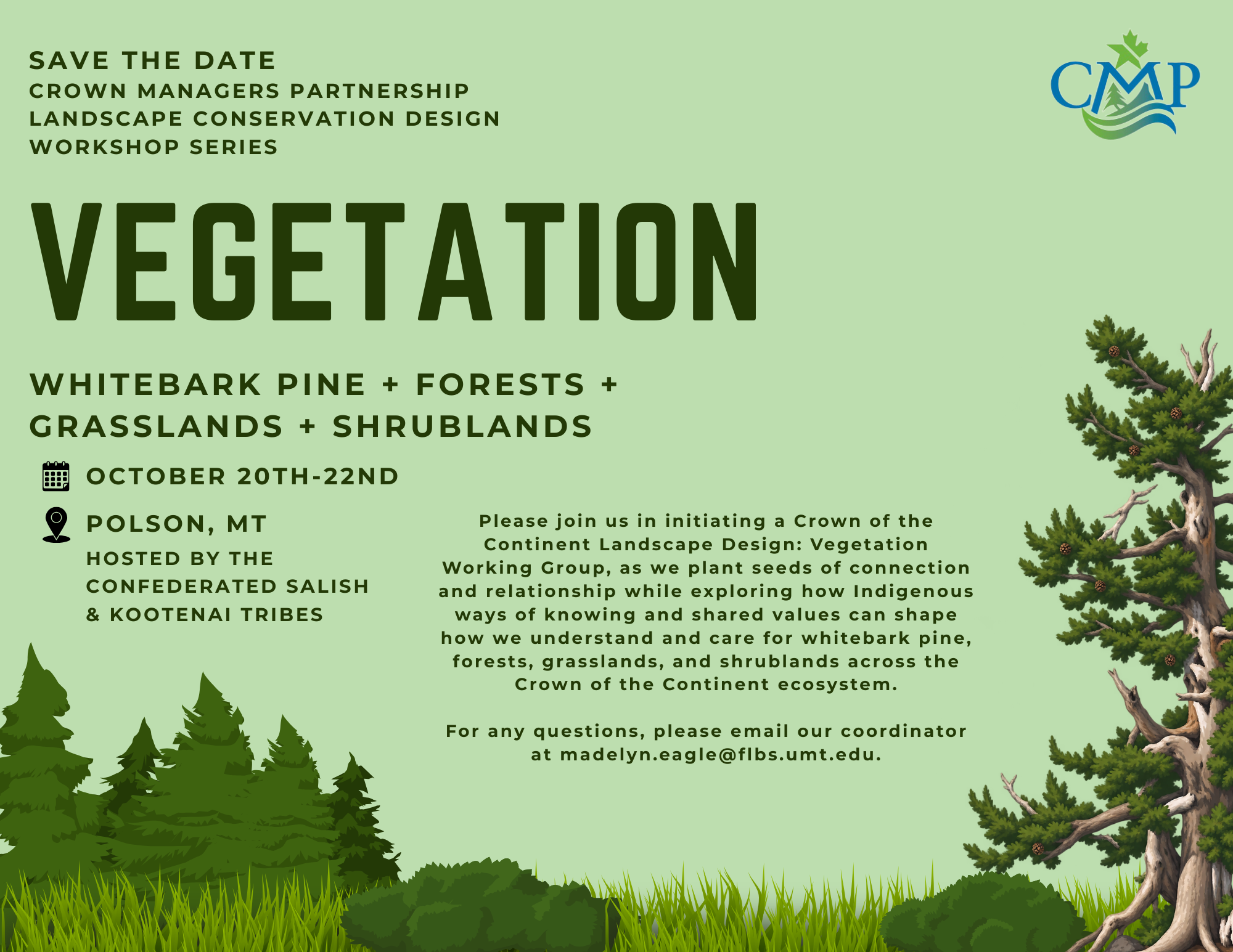
Vegetation Workshop:
Whitebark Pine, Forest, Shrubland, and Grassland
Deadline to register is October 12th.
WHEN
October 20-22nd
October 22nd will be a half day with field trip opportunities TBD.
WHERE
LODGING
Red Lion Inn - Polson, MT
We have placed a room block for 20 rooms at the Red Lion Inn under the name “Tribal Forestry”. Government rates are $113/night.
Phone: (406) 872-2200
There are many other hotels in the area if you prefer to stay at another location.
Subject to change
Day 1 - Tuesday, October 20
Relationship building; understanding landscape signs of health
8:00–9:00 AM
Opening Ceremony, Land Invocation & Welcomes
9:00–10:00 AM
Introductions (let’s get to know each other)
10:00–10:15 AM
Break (coffee and snacks provided)
10:15–11:00 AM
Invitation for an Invocation (Workshop desired outcomes, vision, background)
11:00 AM–12:15 PM
Data Sovereignty, Biocultural Restoration, and the 6 R’s (Respect, Relationship, Representation, Relevance, Responsibility, Reciprocity)
12:15–1:15 PM
Lunch (catered by Bison Cafe)
1:15–1:30 PM
Use of Language (braiding language)
1:30–2:45 PM
Activity: Dynamics of Reciprocity (Exploring reciprocity through the gifts we each bring to the collective)
2:45–3:45 PM
Breakout Exercise 1: Signs of Health (What are the ways of knowing the Places Relatives Live [grasslands, shrublands, forest] and cultural keystone species [whitebark pine]?)
3:45–4:00 PM
Break (coffee and snacks provided)
4:00–4:45 PM
Exercise 1: Breakout Groups share what they learned with the larger group
4:45–5:00 PM
Wrap-Up and Reflections
5:30–7:30 PM
Evening Reception — join us to continue developing relationships at a casual, no-host dinner
MacKenzie River Pizza — 207 Ridgewater Dr., Polson, MT 59860
Day 2 - Wednesday, October 21
Threats, strategies, and actions
8:00–8:30 AM
Welcome and Day 1 Recap
8:30–9:30 AM
LCD Phase 2 Conservation Opportunities Model (What the model tells us, how we can use the model in shared stewardship, and discussion on how to improve the model as we continue to learn and build relationships)
9:30–9:40 AM
Break (coffee and snacks provided)
9:40–10:35 AM
Breakout Exercise 2: Threats to the Places Relatives Live and Cultural Keystone Species (What concerns do you have about grasslands, shrublands, forested vegetation, and whitebark pine?)
10:35–11:20 AM
Exercise 2: Breakout Groups share what they learned with the larger group
11:20 AM–12:15 PM
Breakout Exercise 3: Strategies That Address Threats (What are we doing that works that address the threats we just discussed or kept the threats at bay? What new strategies do we need? What can we do together and link arms?)
12:15–1:15 PM
Lunch (catered by Bison Cafe)
1:15–2:00 PM
Exercise 3: Breakout Groups share what they learned with the larger group
2:00–2:20 PM
Breakout Exercise 3 (continued): Refining Strategies based on larger group feedback
2:20–2:35 PM
Break (coffee and snacks provided)
2:35–3:35 PM
Breakout Exercise 4: Management Activities (What specific management activities need to occur to advance the conservation strategies from Ex 3?)
3:35–4:20 PM
Exercise 4: Breakout Groups share what they learned with the larger group
4:20–4:45 PM
Exercise 4 (continued): Refining Actions based on larger group feedback
4:45–5:00 PM
Wrap-Up and prepare for the morning
Day 3 - Thursday, October 22
Connecting working groups; time on the land
8:30–9:00 AM
Welcome and Recap
9:00–10:00 AM
LCD Working Groups: Purpose, Vision, and Value (What is needed to support the success of working groups?)
10:00–10:15 AM
Break
10:15–10:45 AM
Thank you for giving us your time and sharing thoughts, hearts, and ideas with us!!
Reflections: How Did This Go?
10:45 AM–12:00 PM
Working Groups Get to Work (organize exercise information and plan for your next meeting)
12:00–1:00 PM
Lunch (sack lunches provided for field trips)
1:00–5:00 PM
Field Trip: CSKT Greenhouse and Bison Range (AERI Project Showcase)
OUTCOMES
Build on our learning of Indigenous worldviews and value systems in the development of the LCD and beyond.
Increase our understanding of Indigenous Knowledge Holders’ guidance regarding the ways we engage in our relationships with tribes moving forward.
Continue to strive towards a solid model of partnership while implementing the LCD.
Have greater understanding of the 6Rs, (Respect, Relationship, Relevance, Reciprocity, Responsibility, Representation) as a foundation for the emerging landscape plan; and how these values and actions can be integrated into efforts of conservation.
Through our contributions in the LCD working groups and their communities, participants continue the journey of developing relationships with each other and the landscapes we are connected to.
Develop a working draft of an LCD plan for grasslands, shrublands, and forests that includes collaborative actions and monitoring activities that reflect the 6Rs—to be later refined and implemented by the CMP Vegetation Working Group.
LCD Vision Statement
“Together, we care for an interconnected landscape where people, waters, plants, animals, and all our relations thrive. Within this landscape, the full potential of all beings is supported today, in honor of the past, and for future generations. We approach this relational work with respect, reciprocity, and in consideration of relevance, responsibility, and for full representation of all our relatives.”
Workshop FAQs
Coffee, tea, water and morning snacks will be available, but we recommend you have breakfast beforehand. Feel free to bring your own snacks.
Lunch will be provided on all three days; please indicate any dietary restrictions on the registration survey.
There will be a dinner social at Mackenzie River Pizza (next door to the hotel). That meal is pay-your-own-way. Dinner on the other evenings is on your own.
What food will be available?
1
Can I attend 1 or 2 day(s) of the workshop?
2
Although you are welcome to only attend 1 or 2 days of the workshop, we strongly recommend attending all three days. Our agenda is set up to build upon the previous days work, and each day will include important relationship building sessions as part of our goal to create a more relational approach to conservation.
In response to the interest we’ve received from those hoping to learn more about our upcoming Landscape Conservation Design (LCD) Vegetation Workshop, we’re pleased to offer an option to listen in virtually via Microsoft Teams.
This option is intended to provide an opportunity to observe the workshop presentations and follow along with the conversations as they unfold. We will have the Teams chat open for virtual attendees, but please note that this is primarily a listen-in opportunity rather than a participatory virtual session. The workshop is designed around in-person relationship-building, discussion, and collaborative activities, so virtual attendees will not be able to fully participate in those components.
If you have not received the calendar invite, but would still like to participate, please contact Madelyn Eagle, our coordinator, at madelyn.eagle@flbs.umt.edu.
Is there a virtual option for attendance?
3
What should I bring?
5
6
What other workshops will be offered?
How can I be involved even if I can’t attend the workshop?
4
For each species or ecosystem covered in the Landscape Conservation Design workshop series, we will form a Working Group. If you would like to be involved in future projects related to any of these species or ecosystems, please contact our coordinator Madelyn Eagle at madelyn.eagle@flbs.umt.edu to be added to the contact list.
We will be holding three additional workshops (dates TBD):
Ungulates: mule deer and Rocky Mountain elk
Carnivores: grizzly bear, wolverine, and Canada lynx
Native salmonids: westslope cutthroat trout and bull trout
We have already held a workshop on riparian, aquatic, and wetland ecosystems. If you are interested in joining a working group for any of these features, please reach out to our coordinator Madelyn Eagle at madelyn.eagle@flbs.umt.edu to be added to the contact list.
Bring a notebook and pen if you want to take notes or join activities. If you’ll need digital resources, bring a laptop or tablet. For field trips, wear sturdy shoes you don’t mind getting dirty (mud, uneven terrain). Dress in layers and bring a waterproof outer layer so you’re prepared for any weather.
PREVIOUS WORKSHOPS
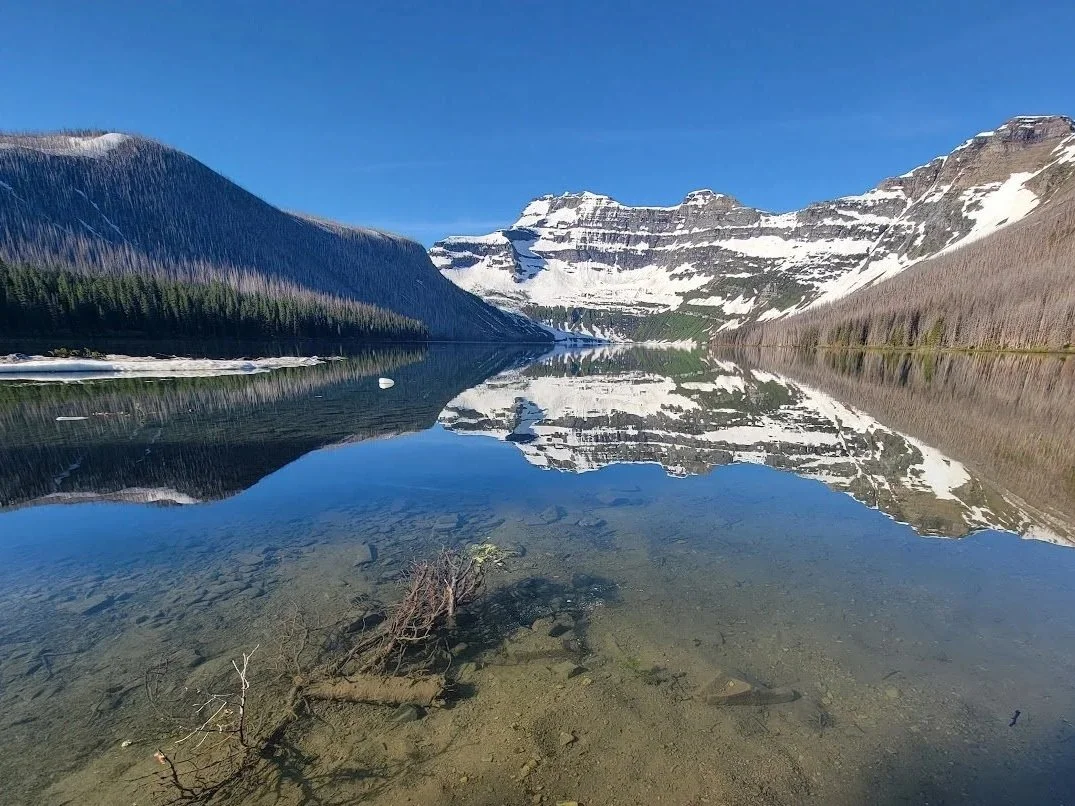
Riparian, Aquatic and Wetland Workshop
The RAW Workshop was held as a three-part virtual series on December 1, 8, and 15, and drew on insights shared through in-person sessions with the Culture Committees of the Salish and Ksanka, alongside input from western science experts. Together, these perspectives helped build a shared understanding of the current and historic conditions of riparian, aquatic, and wetland systems across the Crown of the Continent. Through dialogue and knowledge integration, the workshop informed long-term, landscape-scale conservation strategies and directly supported the development of our Landscape Conservation Design, helping guide future working groups, research priorities, and on-the-ground action.